My applications and users have changed, but I don’t think my network has.
Your users and apps have changed. If your network hasn’t, it could be holding you back on performance, security and scale.
June 17, 2026
Enterprise networks used to be very simple. Most users worked from an office, applications and data resided in a data centre and internet was managed from one, central break out point. Today, it’s a very different picture. Users need secure, consistent access to both private and publicly hosted applications, from multiple locations, on multiple devices over multiple types of connectivity. Simple? Like most things in life, it’s manageable when you knowhow.
Is my WAN still fit for purpose?
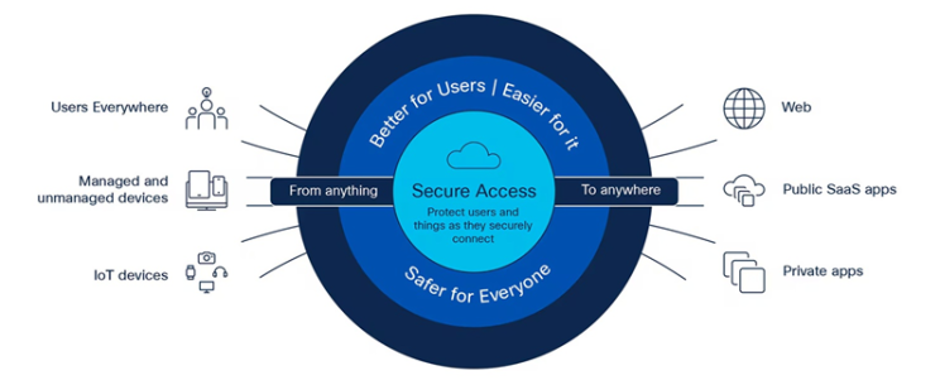
Traditional branch networks were built on a hub-and-spoke model, with branch users connected to a central location e.g. Head office, or data centre, for access to applications and the internet. Also, within that central location, typically there would be an Internet DMZ, where all internet bound traffic, including all remote locations were routed and filtered.
That design made sense when everything lived in one place, however, today, applications are distributed across on-premise environments, private cloud, and SaaS platforms — and users are just as distributed.
While hub-and-spoke still has its place, it needs to be re-evaluated in the context of how your business actually operates today — where your users are, what they’re accessing, and where those applications now live.
While hub-and-spoke is still a valid approach to network design, proper consideration needs to be given to how your business operates, including where your users are, what they’re accessing, and where those applications now live. Ultimately, your network should deliver a secure, consistent and seamless experience regardless of location.
Planning is key
Without a clear network roadmap, your ITteam will likely end up having to support an overly complicated network, with apatchwork of point solutions, that have accumulated over time.
When reviewing your network, it’s worth reviewing how employees connect securely to your corporate applications, and asking a few key questions:
- Where do my applications reside – in house on premise, cloud hosted, or both?
- Where are my users based - fixed corporate locations, homeworker, field based, or hybrid?
- How do we enforce a consistent, simple, effective security posture for all users and applications?
- What SLA does the business need for WAN, as this influences both connectivity access type and application availability needs.
Secure seamless access – anywhere
As users and applications have become more distributed, the challenge is no longer just connectivity; It’s delivering secure access without compromising performance or user experience. However, with this shift comes the critical challenge of maintaining security while providing access to sensitive resources. So, what’s the answer?
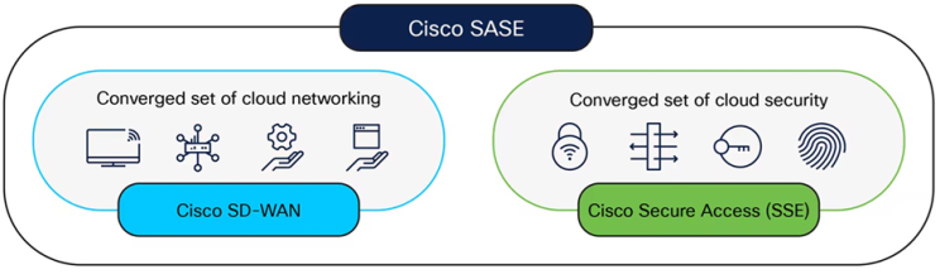
A cloud-hosted Secure Service Edge (SSE) solution will allow you to apply consistent security policies, delivering advanced threat protection for internet-bound traffic from remote and branch users.
To solve the modern-day WAN challenge of applications residing in multiple different locations, consider adopting anSD-WAN overlay to steer your traffic to and from source and destination securely and efficiently while adhering to the required business SLA.
Together, these approaches help organisations move away from rigid, centralised architectures and towards something far more aligned to how people actually work today.
The shift isn’t just technical
In many cases, the challenge isn’t deploying new technology. It’s rethinking the assumptions behind the existing network design. The organisations seeing the most benefit are the ones that ask a simple question: Is our network designed for how we work today — or how we used to work?